Login
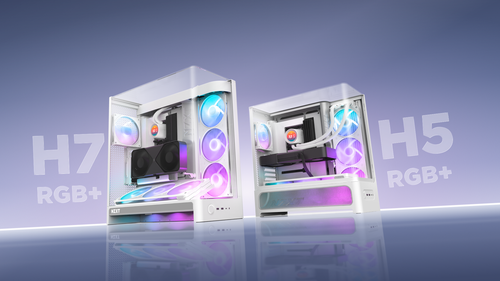
Meet the H7 and H7 RGB+: Built to Be Seen

The glass does not stop at the corner. Or at the top.
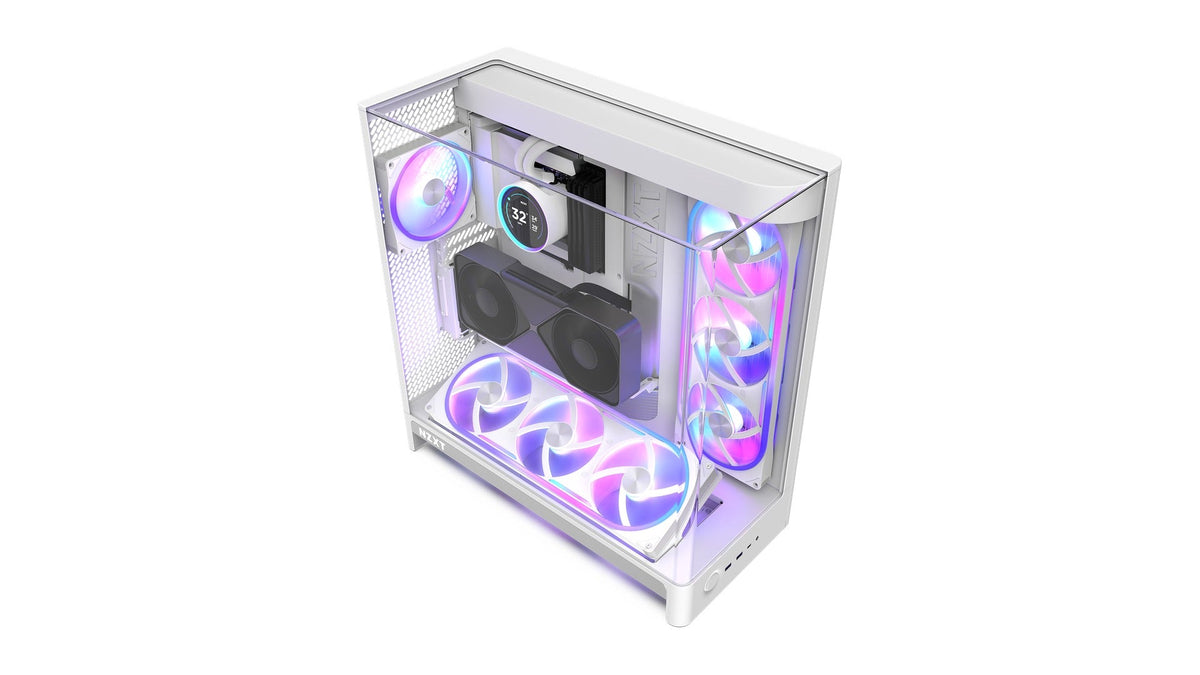
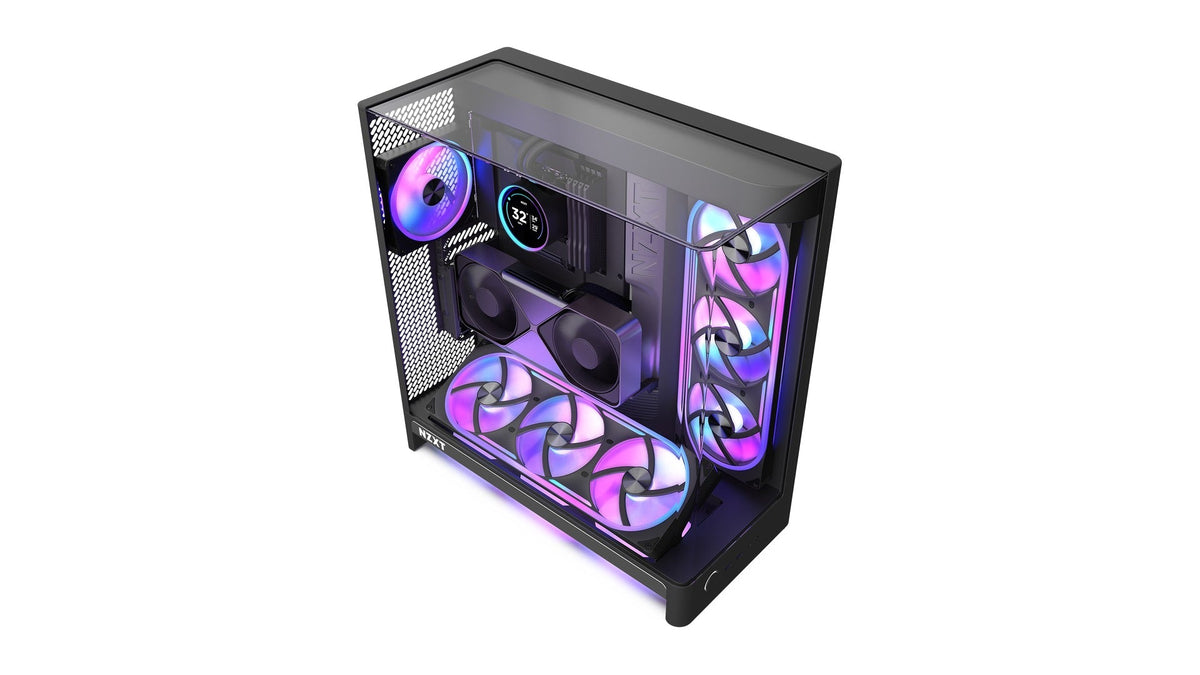
The H7 is a single-chamber ATX mid-tower wrapped in glass. Front and side are one piece, curved rather than joined, so nothing at the corner breaks the line. Both models then ship in Vista Mode, with the top cut to the same radius, so the glass carries over the top edge with no frame at the transition.
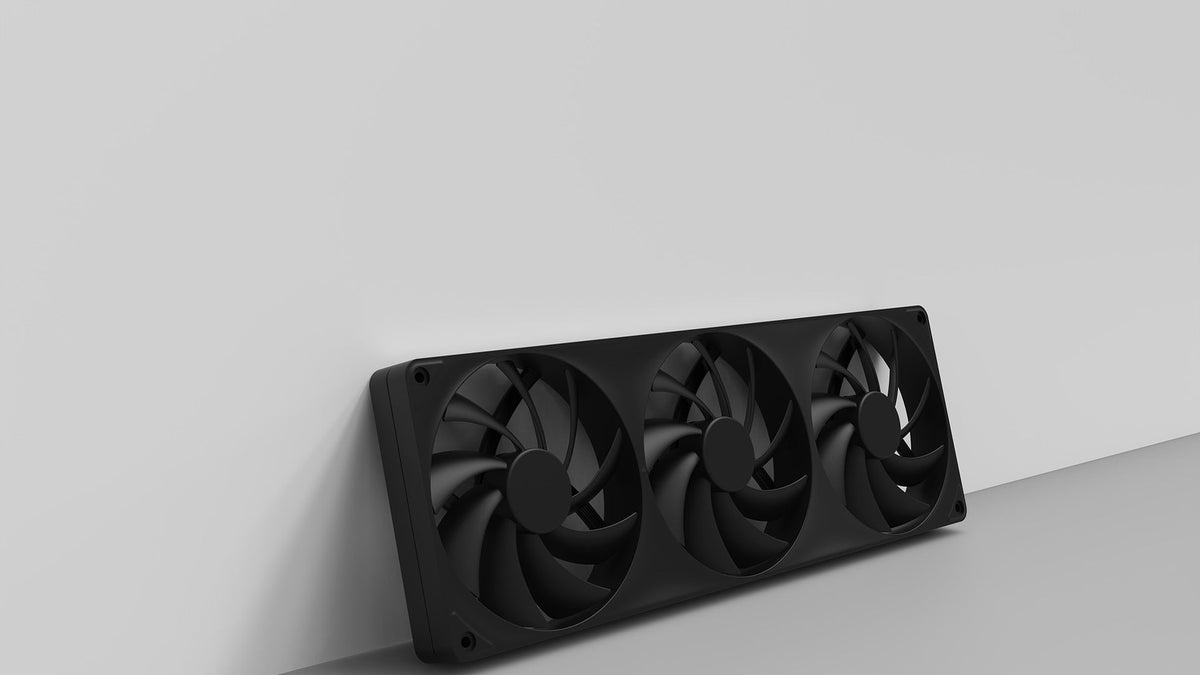
It comes two ways. The H7 arrives without fans, ready for the cooling you choose. The H7 RGB+ comes with two F420 RGB Reverse single-frame fans, an F140 RGB fan and a Control Hub Lite already installed and wired. Same chassis, same glass, same day.
Here is what went into it.
Front to side to top

Holding a curve through tempering is a tolerance problem, and so is cutting the top to match that radius closely enough that the transition reads as continuous. Get both right and nothing runs through the view — no seam, no bracket, no line where two panels meet. Opposite the glass, the right panel is steel mesh with a nylon dust filter.
Two tops, one case

The glass top is fitted out of the box, and a steel mesh panel with its own fan bracket ships beside it. Swap the mesh in and the top mounts open up for a radiator up to 420 mm — a glass showcase or an airflow build from the same chassis, without buying a part. The angled bottom fan bracket is in there too.
Made to show off

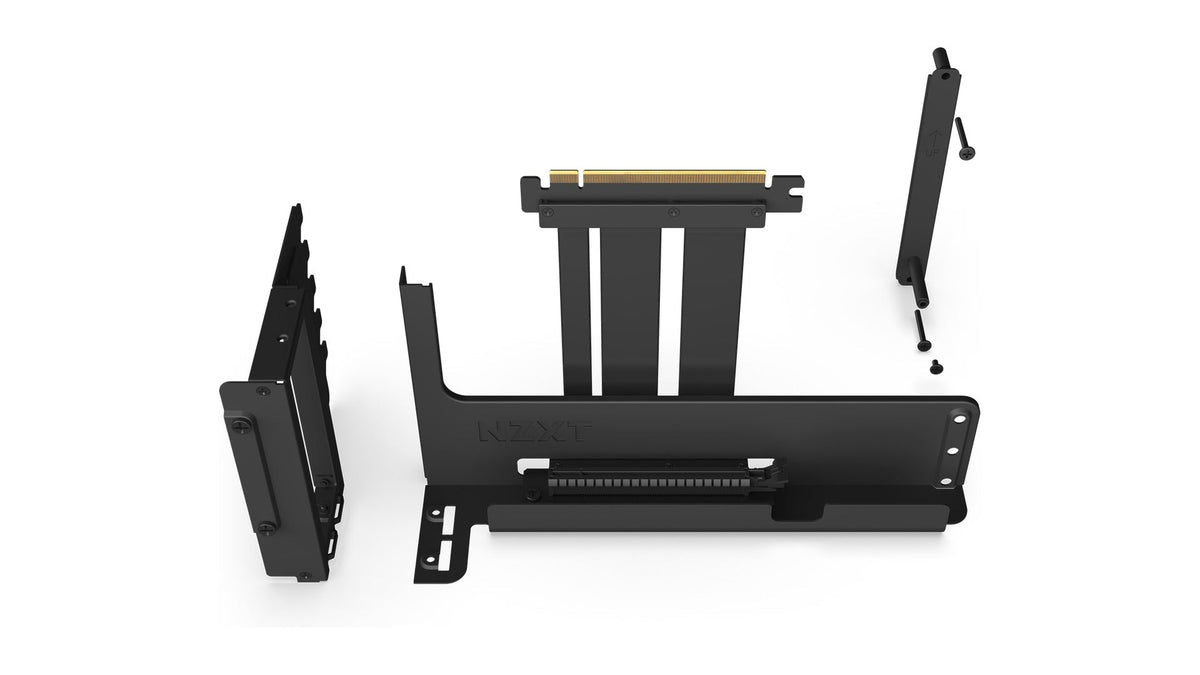
That angled bracket turns the bottom fans out toward the glass rather than straight up, and vertical GPU mounting turns the graphics card the same way. A lit NZXT logo sits on the side panel in white. On the H7 RGB+ the fans are already wired to the Control Hub Lite, so lighting and fan curves are set in NZXT CAM from the first boot — nothing to mount, nothing to route, nothing to sync afterwards.
Clean, start to finish

Back-connect motherboard support puts every power connector behind the tray, and a dedicated channel takes the AIO tubing out of the sightline — its cover lifts out if you would rather show the tubing. The mesh panels, top and side, come away by hand, nylon dust filters sit on the right side and the bottom, and the front I/O carries USB-C, two USB-A ports and a headset jack.
Room for the biggest hardware

Behind the glass there is room for a graphics card up to 495 mm, held level by an integrated adjustable anti-sag bracket, and for a radiator up to 420 mm on the right side — or on the top once the mesh is fitted.
What changed from the H7 Flow (2024)
- Front and left side — a mesh front and a flat tempered glass side meeting at a corner → one curved glass panel across both, with no seam
- Top — steel mesh with a 360 mm top radiator → glass as standard, with a steel mesh alternative in the box that takes a 420 mm radiator
- Room — 62.1 L → 75.2 L; graphics cards 410 → 495 mm, on an anti-sag bracket that is new this generation; CPU air coolers 185 → 188 mm
- Motherboards — back-connect support is new; E-ATX is no longer supported, where the 2024 H7 Flow took it up to 277 mm
- Front I/O — the same two USB Type-A, one USB Type-C and headset jack, moved off the top panel to the front
- Fans — three F120Q fans included → the H7 comes with none, ready for the cooling you choose; the H7 RGB+ arrives with two F420 RGB Reverse fans, an F140 RGB and a Control Hub Lite, installed and wired
Which one
Bringing your own fans, or planning the cooling out yourself? Start with the H7. Want the lighting settled on day one, tuned in NZXT CAM before you have installed anything? Take the H7 RGB+.
Availability
The H7 and H7 RGB+ come in all-black and all-white and are rolling out to authorized retailers worldwide over the coming months. Availability varies by region and store.
- H7 — $159.99 (AMER/APAC), €169.90 (EMEA)
- H7 RGB+ — $259.99 (AMER/APAC), €259.90 (EMEA)


Product pages: H7 · H7 RGB+
Where to buy: nzxt.com/pages/retailers-nzxt